In the most recent session of a weekly 5e campaign I run, set in Magic: the Gathering's Greek mythology-inspired plane of Theros, my players began a delve into a massive library in an underground city on the border between the Mortal Plane and the Underworld. This wasn't unexpected, since the story had been leading them there for a few sessions, and I'd planned the dungeon by writing out the rooms, stocking it, and even making a proper battle map.
Because it's a giant library, I also made sure to include some treasure in the form of specific books, ones that were either monetarily valuable or ones that I knew had roleplay/backstory value to specific characters. To be clear though, I wasn't really looking forward to this process. That's because there are usually three major methods of creating books-as-treasure:
1. Take an existing book, usually something well known like To Kill a Mockingbird, and slap a coat of fantasy paint on the cover (usually including a funny referential title like To Kill a Manticore, although that's not technically required).
2.
Using your knowledge of the setting and/or your PCs backstories, design
a book, including its appearance, title, and a brief description of the
contents and why they'll matter to your players.
3. Find one of the
hundreds of online Fantasy Book Generators™ and roll on it, adjusting
the results as necessary to achieve the flavor best suited to your game.
Using mostly the first and second method, I made about a dozen specific books. But I tried my best to shunt off some of the effort with a few classic GM tricks-- adding shelves of poorly maintained books made ruined and worthless because of damage, books that lack interest because they look cheap but are in languages not known by the PCs, and using weight to limit how many books the party could run off with.
Did It Work?
Well, it definitely helped limit the amount of legwork I had to do, but it also means that in a library of hundreds of scrolls, books, clay tablets, and other informative material, there are only 12 books of actual note. The others worth taking are best described with the line "it seems like it could be valuable, but you'll have get it appraised to know more." This is exacerbated by another issue, which is that my players go absolutely ga-ga for books, and will definitely search every shelf they see. Together this means that the more time my party spends in the library-dungeon, the more the game loses verisimilitude to an absurdly large number of books without any apparent content.
When we start our next session and resume searching piles of books, I'm going to need something fast and punchy for developing fun and interesting books on the fly. That seems like a perfect use case for Method #3, using a random book generator, but the issue is that there are so. many. bad generators for fantasy books. A secondary issue is that almost every single generator assumes a generic high fantasy setting, or stocks itself with waaaaay too many examples of punny books made using Method #1. I don't want my fiftieth copy of "an orange book bound with red thread, titled Brotherhood of the Necklace", especially in a setting inspired by ancient Greece. What I want is "a book describing the historic effects of necromancy on the work force of the Meletian Peninsula". Now that's something that's gonna grab a player's attention, but it's also something you're effectively never going to have to explain in more detail. Unfortunately, generators like that either don't exist, are very rare, or too setting non-specific to really be what I want.
So that's the problem I found myself with, and after days spent mulling over the idea of how to make interesting, setting-specific books on the fly, I realized there's already a fully-built, highly-detailed, numbered table full of specific types of books. We already use it every day in real libraries all around the world! I'm talking about none other than the Dewey Decimal System.
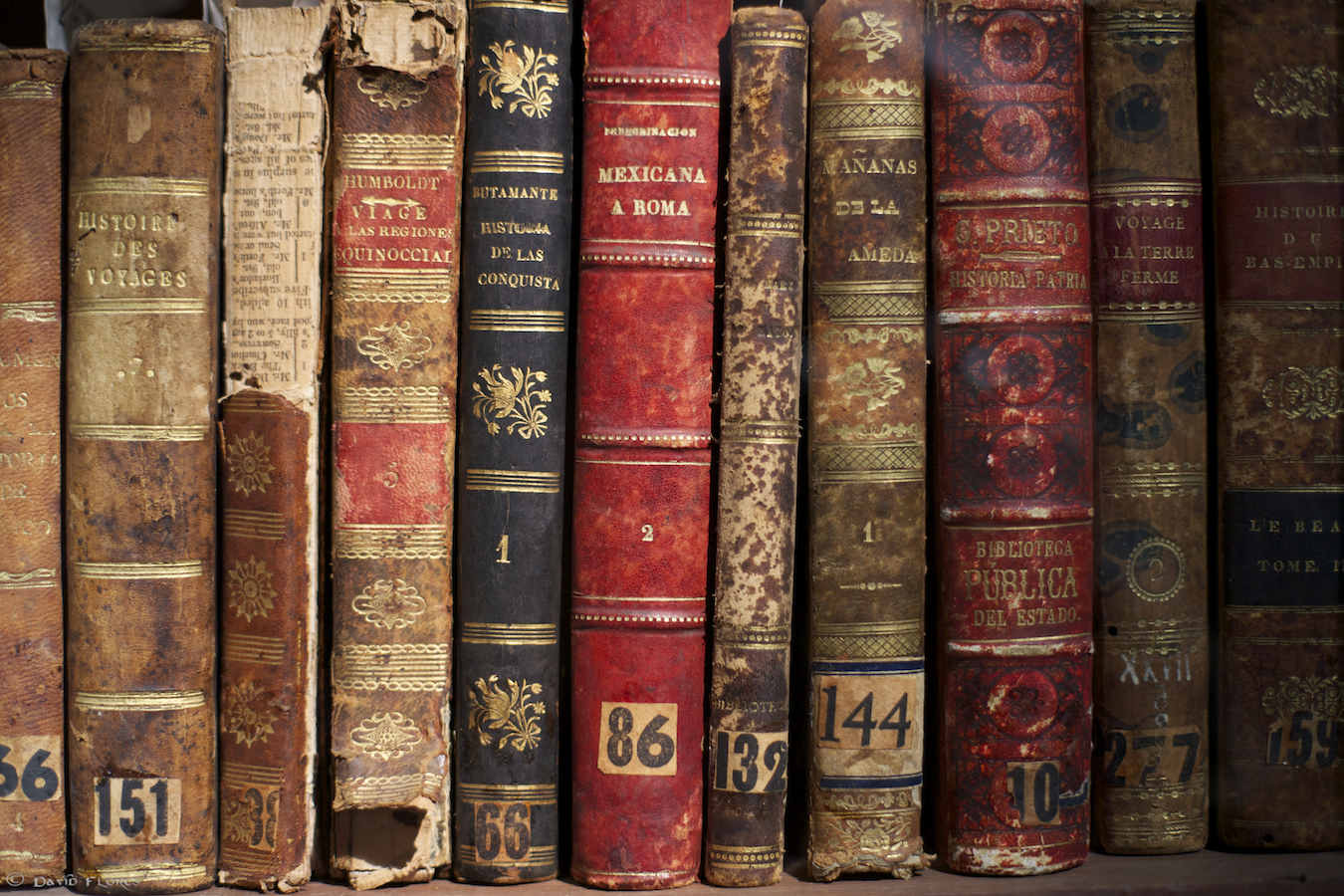
Now THESE are the kinds of books I'm looking to generate.
What is the Dewey Decimal System?
In case you're unfamiliar, or you learned it once and then forgot (I wouldn't blame you) the DDC (or Dewey Decimal Classification, if you're formal and long-winded) splits all books into three sets of 10 divisions, each one more specific than the last. It maybe sounds more complicated than it is, but basically, it sorts every book into a category using three numbers, and the numbers tell you what the book is about.So for example, a book in section 661 is Technology [6**] --> Chemical Engineering [66*] --> Industrial Chemicals [661]. And I didn't choose that topic, by the way! I determined it randomly, by rolling 3d10.
Whenever you need to make up a book on the fly, you don't have to dig around for a random generator and you don't have to try and shift bits and pieces of the result to better fit whatever setting you're using. Instead, just pull up the Dewey Decimal list, roll 3d10, and make up a generic idea that fits both the topic and the setting. When you roll the dice, you can either roll 3d10 in order and use those to find the topic (so 3-4-3 in order gives you Military, Tax, Trade, and Industrial Law) or you roll all at once then mix-and-match the numbers for extra flexibility (so you could take 343, 334, or 433).
When you roll, you can use the Wikipedia page for "List of Dewey Decimal Classes" (the one I linked above) or you can use this page at the Institute for Social and Economic Change (which is apparently a research institute in Bangalore, India). Personally, I prefer the latter because it's already split up into three sections for you, each with their own little table of results.

And look, I'm not going to argue this is faster than a random book generator, because it obviously isn't. But in some ways, it is easier. I find that random generators tend to produce results with titles that are groan-worthy puns, rely on elements outside of my setting (no elves in my campaign without elves thank you), or sound much more grandiose than a bit of random treasure (good luck getting your party to sell a book called Fey Secrets: Revelations of the Cracked Mirror.) They also almost universally focus on very fantasy-esque genres like myths and arcane lore, totally neglecting some of the truly fascinating or nitty-gritty genres like travelogues and geometry. It's also way more fun to quickly toss together a book that fits your setting, and see where it leads you.
But Are You Sure It Works?
To act as an example, I'm going to really quickly roll 3d10 and make a book about the topic. Like seriously quick-- roll, look it up, and 30 seconds or less on the concept. Probably faster than I would even take in an actual game, where my players would also be asking questions and (unknowingly) helping me expand the concept. I'd say you could time me, but obviously I already did all of this in the course of writing the blog post, so just pretend it's happening concurrently with your reading. Okay? Okay. Ready? Let's go.
Alright, 3d10 gives me 275 (in that order) which points us at Religion: History of Christianity, and History of Christianity in Asia specifically. In Theros, Heliod is the ruler of the gods, a Zeus expy associated with the sun and light, making him a good christian-type deity replacement. There isn't an Asia, but there is Setessa, the easternmost section of Theros and a place where most people primarily worship Nylea and Karametra, the God of the Hunt and God of Harvests, respectively. So this book is about the history of Heliod's worship in Setessa, its spread and the struggle to maintain prominence against the worship of Nylea instead. Quick title idea is History of Heliod's Temples: Worship in Setessa.
It isn't complicated or original, but that's also kinda the point. It also gave me a jumping off point for drawing the players in, asking questions about the history of Setessa and the nature of divine worship. Thinking about it a little farther, it also sets up a potential series of books all about Heliod, with each volume focused on a specific region.
Final Notes
As you can see, if you end up with a topic that is more real-world specific, like French Literature or Newspapers in Italy, just quickly sub it out with a piece of your own setting, just off the top of your head, and sort out the particulars later. There's a good chance you won't even need to, since its unlikely someone is going to take the copy of a Waterdhavian newspaper from three decades ago that you just rolled up.
If you still prefer using a random generator for your books, I won't blame you. Like you, I also play TTRPGs, which means I love a good d100 table or a well-built generator. My problem isn't using the generators, but trying to find one that works at the moment I need it. I don't want to stock every shelf in my library-dungeon ahead of time, but I also don't want to answer every Investigation roll of 15 or above that my players make with "Riddles of the Sphinx, a scroll of enigmatic riddles that grant esoteric knowledge if solved" (okay, that last one fucks actually, but I promise you I've rolled like eighteen times on this same generator for this post without that level of success so you get my point). I also don't want more than two or three refrains of "you find [d6] books in good condition, on topics ranging from geometry to poetry, probably worth a few hundred gold pieces all together."
I will also acknowledge that generating a random book this way means you miss out on descriptions of the cover, the page type, paper quality, color of the edges, and all that fancy bullshit but I promise you-- you will not need it. Think back to the last time you generated a random book your players picked up. Did you actually give a description of the exterior? And if you did, how glazed were their eyes when you described the method of stitching used on the spine? When it comes to descriptions, sometimes less is more, and unless the book you're putting into the character's hands really does stand out for some reason, the player's minds will come up with a good, old-looking book for you.
I'm going to be testing this concept firsthand on Sunday during my weekly game, so I'll know soon whether it can actually withstand the fires of adversity. But I'm definitely more excited to try this than to keep digging through page after page of Google results for book generators, and that counts for a lot.
No comments:
Post a Comment