City '26, Week 7: Thoughts on the Project

Now over seven weeks into City '26, and I've managed to overcome my first real scheduling challenge-- last week I went to a concert in a different city, ~3 hours away, then came back the same night/morning to step in the door at 6 AM. It was a great show! Amazing bands, plus a venue I've never been to that felt like it accurately captured the "Philly grunge" I've been so desperately missing since moving overseas. But as you can imagine, that meant no City 26 entries for the day of the concert OR the day right afterward... aaaaand I also didn't end up writing anything the day before the concert either. Just bad scheduling and laziness, in that case. It meant I lost basically half my week without anything written! But I took a little extra time, spread the missed entries out over the rest of the week, and got caught back up!

That doesn't sound so hard, I know. They're short entries, and doing more than one a day for just a little while isn't exactly backbreaking labor. But for a second there, I really did contemplate quitting. I had to actually sit down and ask myself "what am I doing this for?" It's a question I've asked myself before, one I'm definitely going to end up asking again, and one that feels really important for me to regularly come back to.


Me, questioning whether I even enjoy writing (an activity I've performed regularly for seven years) after not writing anything for five fuckin' minutes.

If you've ever set out to complete a long-term project of any kind-- whether it's writing, an art piece, some sort of other physical craft, whatever-- you've probably had that moment where you got a little tired, maybe a little bored of it, and put it down, just for a short break. And then, every time you think about picking it back up again, it feels almost impossible. Or maybe not! Perhaps that feeling isn't as universal as I'd like to believe. But I think I've seen it happen often enough, out there in the wilds of internet forums, or in the grand plans weaved by friends. And for me, this experience is pretty regular. I spin grandiose dreams of writing projects (like a blog maybe?) and commit to doing them, regularly and on schedule, then fall off as time goes on.

Thankfully, this has happened to me so many times, I know exactly what the reason is. In my case, it's a combination of burnout and executive dysfunction. I know for a fact that part of my brain requires constantly changing conditions, a regular back-and-forth, to stop itself from chewing holes in the carpet of my mind like a dog trapped inside a back bedroom. Unfortunately, regularly scheduled activities are sort of anathema to this. Especially if they require a lot of thought from me, but are the types of things that shouldn't be very thought-based, like social media presence and posting my writing where people can see it. So every once in awhile, I have to let the rabid dog bit of my brain out to run wild in the fields of entertainment, and accept that whatever I've managed to get done in the meantime is good enough. But the second, hidden downside to this is that when I come back to the activity I left, picking it back up feels much more difficult. 

This is mainly because, as you might imagine, my brain is not well-rewarded by long-term goals. Short-term is fine, sure-- I enjoy the brief rush of getting something complete enough that I could use it for myself, or share it with other people. But long-term goals (like finishing a writing project deliberately designed to take a year to complete) feel a lot less rewarding. Because they feel intangible. Because they haven't given me any sort of joy (read: dopamine) for awhile. Because I've stopped focusing on them for 24 hours, causing the discrete chunks of the task to shift away from "takes 30 mins to complete" and into "this will take hours to do".  But hold on! I've discovered a secret; a way to trick my brain into converting a long-term goal into a short-term, brain-massaging reward, and deal with picking it back up EVEN IF it feels like writing a d10 table will take 3 hours. I ask myself "what am I doing this for?", and then I let myself daydream. 

I stop focusing on what it's going to take. I don't think about the effort I'll have to put in to placing words on a screen, making patreon updates, bluesky posts, and self-advertising. Instead, I let myself be lost in the unlikely visions of success without effort. And when I come back to the ground, I can feel myself on the edge of that success. And suddenly, the long-term reward feels like it's just a few short-term actions away.

Is this healthy? I have no idea. Is it useful for other people? Also not sure! Plus in the end, part of what helps me to sit down and actually get anything down is also having a regular, daily schedule. Not a "calendar-it-in and chunk out 30 minute blocks" type of schedule, but just a basic daily routine of wake up, shower, eat and watch a little TV, write something, do errands, write some more. But when that daily routine is interrupted by something, whether it's 24 hours of travel and live music, more errands than normal, or a day off to spend time with a friend, picking back up what I put down is hard. Especially if I was already starting to fall into the part of the creativity cycle where I was getting a little bit bored of whatever I was working on. Sometimes, stepping away to work on something similar, but not identical, also helps-- like writing something other than what I should be working on. Maybe something like writing a blog post about procrastination, instead of a blog post about game design or a daily writing challenge? But a little daydreaming, about what the project will look like when it ends and what it'll feel like to have it done, goes a long way too. And for me, the way to ignite that daydreaming is definitely to sit down, and ask myself "what am I doing this for?" Not only is that probably an important way to reassess whether I'm actually doing something I want to do (not every project is meant to be finished; sometimes you stop enjoying something entirely and that's okay too) but it's also a great way to remind yourself of what the larger, motivating reward behind a project originally was. Even if a project itself is fun, I think its useful if you don't let yourself lose sight of what inspired you to pick it up in the first place.

City '26, Weeks 5 + 6: The Rovers (Harborside Faction)

Well, another two weeks have come and gone, but I've somehow managed to maintain my efforts on City 26! Not bad, if I do say so myself. I was worried the beginning of February is where I would start to falter, but I'm still feeling very committed. Of course, I managed to keep Dungeon 23 going all the way up until April, so I'm not quite at the point of beating my record yet.

Once again, I'm trying to limit some of the hassle of the challenge for myself by only making updates here when I actually finish something. While I like writing, I actually struggle a lot with posting on social media (I never really took very well to the habit), and even though I really wanna share my work it's got to battle with my urge to remain unobserved personally. That aside, it means today I'm sharing the first fully complete faction of this setting/district, the Rovers!

Although they aren't pirates, I promise this image is relevant to the Rovers all the same. 

What Are The Rovers?

As a classic harbor/port district, Harborside doesn't feel complete without its share of crime. And of course, what's the point of having crime in a pseudo-fantasy setting if you don't have a few crime families/thieves guilds? Actually, Harborside (and Port Callus as a whole) have several, but the Rovers are my attempt at cutting into the classic "thieves guild" trope. I say cutting because, while I would like to have an approximation of a thieves' guild, I'm looking to break away from some of the repetitive standards of the trope and build something a little more realistic for my setting. Doing that means taking what I like (underground headquarters, honor among thieves) and leaving some stuff behind (specific "roles", firm hierarchy).

Before I get into the Rovers themselves, it's worth noting how I build factions. My method pulls from several places, but primarily the outline found in (again) Idle Cartulary's Preparing for City 26 blog post. The outline includes some common faction stuff I like to use (specific NPCs, Assets, Quirks) and some stuff I don't; the things I do use, I tend to write a little differently. For example, when trying to build quick NPCs (like for, say, a year-long writing challenge) I actually use The Retired Adventurer's system of Motive, Means, and Opportunity. I like it because it gives me a handle on how to run them, but for a location-based design challenge like this one, it also lets me weave them deeper into the fabric of the setting. Although I keep the wording of their motive general, I usually build it around how the setting works and what sort of factors in the setting that I know are putting pressure on that NPC.

Who They Are

I'll start with the factions major NPCs-- this isn't all of them, of course. There's plenty of members, but the point is to keep the Rovers as an informal group; again, trying to avoid the trope of a thieves' guild whose stringent ranks and organization leave it feeling like a military.

Ardin (M, Leader)

  • Motive: "Traders take people's money, guilds take the trader's money, rich folk own the guilds, and sneaks like us take money from the rich. It's all a big circle of life."
  • Means:
    • Charismatic, naturally born leader, skilled at getting people to see his side of the story.
    • Cultivates unyielding loyalty from most Rovers, many of whom would happily give themselves up to save him.
    • Good at connecting events and actions that seem unconnected, letting him see the city's political flow even though he isn't directly involved.
  • Opportunity: If Ardin can find a way to make the Rovers secure, to ensure the group lives on if something happens to him, then he's willing to risk everything he has to make it happen-- but only as long as it doesn't risk the gang.

 Diniz (NB, Smuggler)

  • Motive: "Ardin doesn't take our line of work seriously enough, but if we tried harder, we could compete with some of the bigger gangs."
  • Means:
    • Well-known at the docks, although not well-liked, but many sailors and merchants are still willing to do business with them.
    • Knows how to get in and out of the city without drawing attention. They also know how to get into parts of some of the city's landmarks that aren't accessible to the general public, either by bribery or by stealth.
    • If it came down to it, some Rovers would support Diniz's bid for leadership, even though they're loyal to Ardin. This is because Diniz is better at bringing in money. But if the gang were to become financially secure, they would jump ship.
  • Opportunity: If Diniz sees a chance to undermine Ardin's competency in front of others, they're sure to take it, but only as long as they can still feign ignorance later or if Ardin's plans works out.

Lacinda (F, Fence)

  • Motive: "I'm tired of living small with the Rovers; I want to build up enough stock to open a real market stall, and do something with my life."
  • Means:
    • Has an eye for value, able to accurately estimate the price of most objects after a short period of study. She's even read a lot of history books, all to get better at pricing older, more unusual valuables.
    • Has access to an existing network of collectors and merchants who purchase her questionably obtained stock at bargain prices, without asking questions. She hopes to turn them into real merchant contacts when she has her own stall.
    • Has hidden away a sizable stash of money, nearly enough to purchase a cart, permit, and additional stock. But in a truly desperate emergency, something that threatens her safety or security, she'll use it.
  • Opportunity: If someone brings Lacinda a particularly valuable item-- something unusual she or the other Rovers would never normally get their hands on-- then she can't resist the temptation to lie about its value, underplaying it in order to buy it cheap then sell it later and pocket even more for herself.

What They Have

After the major NPCs comes the major assets that the faction has access to. In the case of the Rovers, it's not a lot-- they're an informal group, closer to a street gang. But they're still more involved in the activities of a thieves' guild than any of the proper criminal families found in Port Callus. This means their resources are generally internal (fundamentally a part of the group) and their external resources (usually social contacts or physical objects) are pretty limited/niche in use.

  1. Natural Talent: Joining the Rovers requires a natural talent for thievery, proven by the test for membership, which requires getting a signet ring from a member of a merchant guild. It doesn't matter which guild or how the ring was obtained-- they could break in to their house, slip it from their finger, mug them in an alley, or whatever works best. As long as they get the ring, don't get caught, and don't bring any heat back on the Rovers themselves. This means that all of the members are skilled thieves, in one way or another (and acts as a less formal way of establishing a member's "role" a la traditional thieves' guilds).
  2. Hidden Headquarters: The Rovers host meetings, and several of them live, in an informal "headquarters" in a disused section of Harborside's sewer system. Located below the river's waterline, the massive storm drain was abandoned when the city undertook extensive renovations 60 years ago (right after the population started to explode again). It's very well hidden, behind a false wall that was originally built to brick up the storm drain entirely. Getting to the wall itself is tricky, requiring someone to pass over a makeshift, wooden bridge across a deep sewer canal. The bridge is sturdier than it looks though, and can actually be lifted by a hidden pulley system.
  3. Secret Funds: The cistern at the center of the headquarters also holds a stash of coins, bank notes, and jewelry, and other stolen goods. It's kept in a small tunnel beneath a shallow pool of water, inside a watertight, leather bag. Every time more members work together on a job, they're supposed to bring back a little bit of the take as a fee for the group. Ardin has collected all of it, over time, and placed it in this stash. No one knows about it but him, although some members have suspicions about a hidden fund somewhere. Ardin uses it to fund bail for Rovers who get arrested, pay off informants and a few crooked guards, and buy supplies for the headquarters. But no matter what, he always collects more than he spends, planning to some day use it to make the Rovers into a proper organization.

How They Act

Every group needs at least one quirk to set them apart. Something that turns them from a faceless, disparate collection of people into a real organization of people bound together. 

In the case of the Rovers, every single member has a stick-and-poke tattoo of a jolly roger (the classic skull-and-crossbones pirate symbol) somewhere on their body. Most of them choose a shoulder, ankle, or the side of their abdomen, where it isn't easily noticed but can quickly and unobtrusively be shown off to other members. The specific design for each one varies as well, because the tattoo has to be given by the member that recruited you. This means long-term Rovers like Ardin and Diniz, people who've recruited several other members, tend to have developed specific styles, letting other Rovers know who recruited them when they see the tattoo.

What They Want

A pretty simple question, and an obvious one. What does the faction want to do? What are their aims, their long-term goals? The Rovers have two of them:

  1. Obtain enough money for each individual member to support themselves, even in hard times. The ideal, however, is to establish the Rovers as such a force in Harborside that they earn enough to live well, even when they aren't actively working. This would also mean that if something happens to a member, and they can't work anymore, the others can still help take care of them.
  2.  Update, renovate, and expand their headquarters. While it works well enough, and there's still more space than they need, it isn't the finest locale in Harborside. Most of it is the unused cistern and about a dozen old sewer maintenance rooms, but finding more nearby "dry" sewer areas would give them room to grow. Putting a floor over the cistern would make it safer, putting beds and furniture in all the rooms would give everyone a place to stay that isn't cold and wet, and making other entrances would mean more mobility across the district and avoid having to pass over the (admittedly a little dangerous) bridge each time they want to enter or leave.

Who They Know

Finally, every faction needs a few allies and a few enemies. One of each is good enough, two is better, and three is icing on the cake. These might be other large factions, either in the same district or a different one; a "mini faction" that comes into play only under specific circumstances; or even a major NPC in the district the faction is located in, who can almost be considered a faction in and of themselves.

The Rovers have two allies and two enemies, which is a lot for such a small-time operation, but works well when considered alongside the fact that the Rovers, and several of their major NPCs, are all looking to expand into something more formal.

Allies

Pinch: One of several major NPCs in Harborside itself. Although Pinch isn't a formal member of any gang, he maintains a close relationship with the Rovers; several of its members were recommended by Pinch, and are still friends with him. While he can't be counted on for a job, Pinch isn't above taking some heat or offering aid when he sees a member of the Rovers in trouble.
The Pearly Ray: 
A merchant ship and frequent visitor to Port Callus's harbor; its second mate is a former member of the Rovers turned straight, and its captain is a long-time friend of Ardin. Although the ship as a whole sticks to strictly lawful work, some of its crew are less scrupulous. They're willing to help the Rovers when they need muscle, information, an alibi, or if they can be convinced, even a place to temporarily lay low.

Enemies

Casa Nunes: Technically a rival gang, but Casa Nunes is an old-school family, proper mobsters, centered in the northern district of Terra Velha. That said, they've been involved in the seedier side of Harborside's businesses for over five generations. For their part, Casa Nunes views the Rovers as a thorn in their side, but are otherwise unbothered. They've got agreements with the other families, and the Rovers aren't going to be a major threat any time soon. But for the Rovers, Casa Nunes is a major factor in everything they do-- the Rovers present easy targets for Casa Nunes thugs, a patsy for the family to pin the blame on if something goes wrong, and a bug that Casa Nunes could crush any time if they felt like the cost of doing it was less than what the Rovers cost them in business. This means the Rovers feel constantly threatened, and are mostly hoping for a way to avoid the situation until they can protect themselves properly.
The Harbormasters: Exactly what they sound like, the people in charge of the both harbors, the river half and the ocean half. 
As well as being in charge of tracking incoming and outgoing ships and their cargo, the harbormasters of Port Callus function as law enforcement for specific "harbor" areas defined by the city's laws. This includes much of Harborside, making them enemies to most criminals, including the Rovers. Unfortunately for the Rovers, the big families and a couple of the largest street gangs have "agreements" with a lot of the individual harbormasters. As the new kid in town, the Rovers can't afford those same agreements. But fortunately, the harbormaster's newest captain, Master Guerreiro Gonsalves, is cracking down on bribery and has put his focus on threats from outside of the city, taking some of the heat off of the Rovers.

The Spectrum of Allies

So a funny thing happened to me recently. While scrolling Bluesky, where I primarily follow a number of art and TTRPG related people, I came across a post talking about the "Spectrum of Allies," showing a hand-drawn image of a sort of half-wheel with sections titled things like "passive allies" and "active opposition". Thinking this looked like a promising resource on running NPCs in tabletop games, and with not enough time to read the full post (I was bojangling on actually getting real work done) I opened the link in another tab, saved the post, and moved on. 

And SO, imagine my surprise when I later read the article to find that the Spectrum of Allies is actually a real-life political tool, designed to help activists find community support for their causes. Safe to say I was still really interested in the contents of the article, but the thought of using this nicely labelled half-circle as an RPG tool wouldn't leave my mind. But with no one else to do the work, I realized my dreams of another nifty NPC resource would have to be fulfilled by me-- hence this post you're reading now.

What is the Spectrum of Allies?

If you want to read the original article, you can find it right here. It isn't necessary reading because I'm going to kind of recap the essentials, but if you're also the kind of person who likes political science and activism, you really should check it out. The long and short of it is that the spectrum of allies is a tool made by George Lakey, a moderately-famous, nonviolent social activist involved in the civil rights movement, anti-Vietnam War activities, environmental activism, and a lot more. What's wild to me is that he seems to have been very active in Philadelphia (and Pennsylvania as a whole) but this was my first time hearing of him!

Putting that aside though, the spectrum of allies is meant to be a way for activists in a cause to determine which communities would be most helpful, or least helpful, to focus their efforts on for things like campaigning, outreach, etc. The intent is to win allies step-by-step, converting passive supporters into active ones and neutral outsiders into passive supporters. The diagram used to map these groups and assess their support levels looks like this:


An example diagram from the page at the Commons Library, drawn by Josh Kahn (unfortunately no idea who that is and the page doesn't give a link either).
 
Once you have a cause, you take the time to list and examine specific stakeholders in said cause, placing them into one of the five categories. The real use of the tool comes in knowing that the vast majority of people, for any given cause, fall somewhere in the middle of that graph, and even then, the majority of that majority are probably firmly "neutral". Not always because they are inherently neutral, but sometimes because they don't even know your cause exists and directly affects them! Once you know where a group generally falls though, you can work on specific actions to shift them up a notch. If they're passive supporters, maybe they just need help finding direct actions within their means; if they're neutral, maybe they need better info on why your cause matters.
 
Do you see where I'm going with this?
 

Where I'm Going With This  

While it's built to be used as a tool for political activism, this could also be really nifty for tracking the alliances/relationships of NPCs and factions to the players in a TTRPG campaign. In fact, it can be used as both a general and a specific tool. Generally as a way of tracking how certain factions/NPCs feel about the party, and more specifically by examining the actionable goals of a party and figuring out where certain factions/NPCs fall on the scale in relation to that goal.

General NPC Relationships

For general relationships between NPCs and the party, this functions a lot like other "NPC affinity" systems, but for me it has just the right amount of nuance, without getting too complicated or bogged down in details. You can easily place an NPC's relationship to the party somewhere on this scale-- like in real life, most will probably begin at "neutral", with exceptions for people or factions that are overtly against or aligned with players. 

An NPC's location on the scale helps determine things like how much help they might offer the party, what fraction of the resources they have that they'd also be willing to let the party use, or even their initial reaction in any social situation (basically taking on the function of a reaction roll). For example, an "active ally" NPC might freely share important information, loan the party supplies, let them stay for free in their inn, etc. On the other hand, a "passive ally" might offer these same services for a fee or in return for a favor, or might limit the amount of help they're willing to give (so maybe a free stay at their inn, but don't come back every night hoping to rely on their good will).

And of course, "passive opposition" and "active opposition" have roles to play, with active opposition being the party's enemies/rivals, and passive opposition functioning as allies to those same rivals.

General Faction Relationships 

Using the spectrum of allies to map general relationships also works with factions, though with less specificity. An "active ally" faction, probably a faction in which on of the PCs serves as a member, would be a good source of quests, rumors, supplies, and other benefits. On the other hand, neutral factions might be those who place quests on a job board, or approach the party because of their reputation. In this case, success in the quest might also come with the benefit of shifting the neutral faction's position to that of a passive ally. 

In a similar way to replacing the reaction rolls for NPCs, the location of a faction on the spectrum can also help track how specific members react to the party's presence (either by modifying the reaction roll, or negating it entirely in favor of the faction's views). Members of a faction in an active allyship with the party would likely extend a helping hand if the PCs ask for it, while a member of a faction in passive opposition would probably "ice out" the party in social situations, refusing any discussion beyond what's absolutely necessary. And suffice to say, a faction in active opposition means their members are going to treat the PCs as enemies, doing whatever they need to undermine them, up to and including violence.

If you want to get a little more complex with it, you can also think about where an NPC who doesn't recognize the party might fall on the spectrum of allies in a vacuum. A wealthy noble is a member of a "passive opposition" faction, but doesn't know that before talking to the party, letting them ask about important information; once the noble finds out though, that previously accessible source of info quickly becomes closed off. Similarly, if the party meets a rival thief during a heist, the relationship probably won't start off friendly (probably an "active opposition"); but once the heist is wrapped up, if the rival is a member of the same guild, they might be embarrassed by the mix-up and willing to help the party in their next job to make amends (being an "active ally").

Specific Goals

In most TTRPGs, but particularly in games with high levels of politicking, players usually have a specific cause or goal they're attempting to fulfill. Sometimes it's as simple as "clear the dungeon", sometimes as complex as "organize the region's power players into an alliance to fend off the machinations of a doomsday cult." Like the real-life use of the spectrum in organizing and raising support, using the spectrum of allies can be a way to sort factions and NPCs into categories built around their support of the player's goals.

For example, if the party's goal is to "clear the dungeon", their first active ally is probably whoever issued the quest (if anyone). They want the dungeon cleared, and they're willing to pay the party to make it happen. But a "passive ally" might be a merchant in the town near the dungeon, whose business has dried up as a result of whatever threat lurks inside. The merchant really needs the dungeon cleared, but money is tight and they can't afford to chip in their own reward, so instead they'll use what they can offer-- info about the dungeon and its local history, or staking their reputation to vouchsafe the party to other townsfolk. 

Importantly though, outside of the goal to "clear the dungeon", this merchant might not be much of an ally. If the party spent time turning the merchant into a true friend, they might offer a small discount. But if not, well, they need to make a living, and supplies way out here aren't cheap.

Turning the same example to a faction, rather than a specific NPC, perhaps the village has a taboo around disturbing the dungeon that the party is trying to clear, one held only by those entrenched in the old ways or adherents of the local religion. Villagers worried about tradition might be "passive opposition", refusing to do business with the party once they find out the PCs are making trips into the depths-- whoops, there goes your blacksmith! Hope you didn't need any armor repairs. Those faithful to the old ways, on the other hand, might take more of an "active opposition" role. This doesn't necessarily have to mean breaking out the pitchforks and torches (although it's a possibility!) It could mean gathering in the local tavern and hosting town halls, trying to persuade the "neutral" villagers (who don't care about the dungeon and just want to be safe) that disturbing whatever lives there is only going to make the situation worse.

Shifting Slices 

That final bit is, in my opinion, the strongest function of the spectrum of allies. By sorting NPCs and faction into these distinct categories, you can build actionable information about how they might move from one slice of the spectrum to another-- and what the party can do to make it happen.

In the case of the merchant from earlier, they start as a passive ally, but maybe they just need a way to become actionable that works within their needs. They already said they can't offer a reward... but if the party asks about spare supplies, or a small discount on wares, that might be something the merchant is willing to do. Now you've turned a source of passive support into a source of active support instead (and if you can win them over as a friend, maybe the discount carries on even after the dungeon is cleared).

Creating actions that help move groups back and forth across the spectrum is particularly helpful for tracking factions in campaigns with a lot of politicking, especially if paired with discrete goals. A faction that serves as an active ally for one goal might be more neutral on another, while another faction who gives only passive support during one course of action is adamantly against another, turning them into a passive opposition more willing to help the party's rivals. Of course, the eventual goal is likely to build widespread support for the party's overarching goal of the campaign, whatever that might be, turning all of the factions into "active support"-- or at the very least shifting them from being neutral into something more like passive allies. And having the party take a course of action that a faction agrees/disagrees with might risk pushing them closer or farther from actively supporting the party when it's time.

City '26, Week 4: Harborside – Specialty Shops/Services

 So here we are, just over a month on front the start of City 26, and I'm managing to keep pace pretty well. Except for this past weekend (I decided I deserved a short break) I've managed to do one entry every single day. It's not much just yet, but it does mean I've got 31 pieces of Port Callus written up and ready to play. Nearly a complete district! 

But even though I love what I've done and I'm excited to share it anywhere, I'm sticking to my promise to only make a post about it when I actually finish a good chunk. So the only thing I've got finished versus last week is some specialty shops and services you'd find around the Harborside district.


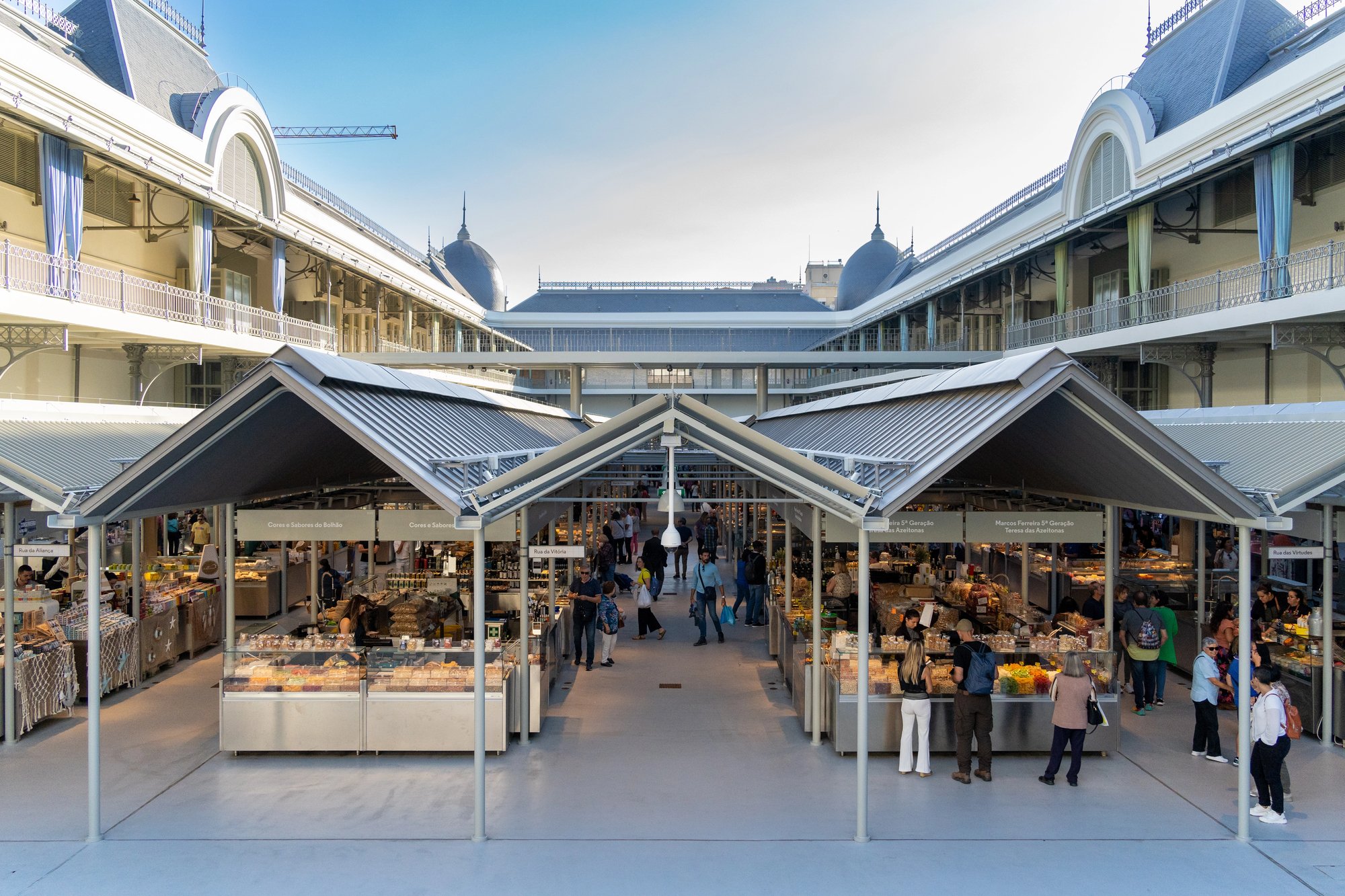
The famous Mercado do Bolhão (surprisingly empty in this picture, because it's usually PACKED).

1d4 Specialty Shops & Services (Harborside)

  1.  Sig, the Mass Market Trader: Specialized "everything" merchant with a vast network of trade connections, willing to buy and sell all stock. Although they'll buy anything, there's no guarantee they'll give a good price for it. Similarly, while Sig sells "everything", what they actually have in stock depends on what's recently found its way into their shop. Newly-arrived stock only sticks around until Sig finds a willing buyer, 2d4 days at most. Build trust, and you might be lucky enough for Sig to reach out when they find something you'd be interested in. And if you're hoping for something off-the-books, Sig is willing to help their friends make a connection (for a fee) but won't participate any farther in the business, meaning there are none of their usual guarantees of quality. 
  2. Red Spice Stalls: Trader stalls found throughout Harborside, usually close to the river but out of the way of main thoroughfares. Red Spice stalls look and function identically to others, offering legitimate goods, but also act as on-the-go black markets. Usually this means contraband deemed illegal by the City Court or banned by the Freemen's Guild, but sometimes they just offer substances tightly controlled by specific guilds– like medicine sold only by the Apothecarium, the city's consortium of medicinal suppliers. In many ways, dealing in these controlled goods can be riskier than selling anything outright illegal, and comes with a steep price tag. Most Red Spice stalls work out of carts or wagons, so that they can pack up and move when necessary, and better avoid complaints by locals who don't appreciate the proprietors using their residential streets.
  3. Water Merchants: The large number of sailing ships that move in and out of the harbor require a constant supply of freshwater for their voyages. In olden days, crews collected water from natural springs along the hillsides, or ventured further up the Goldrock to fill their vessels there. But with the city's advancing urbanization, the old springs have either run dry or been set aside for citizen-use only, while ships can no longer pass the marker line of the Freedom Flag and the river near the harbor has become too polluted. Enter the water merchants, an informal collection of traders who specialize in bringing large hauls of fresh water down from the mountain range in the west. Although general suppliers can also provide water, because their water is sourced from higher altitudes, water merchants guarantee both cleanliness and taste. This has made them the preference for wealthier ship captains, or those planning for long-haul trips across deep water. And although there is no water merchant guild yet, several of the most prominent merchants have begun to organize their efforts, splitting costs and profits between themselves to better compete against the general suppliers.
  4. Tattoo Studios: Where sailors abound, you can always find someone with the needles necessary for putting ink to skin, and this holds as true in Port Callus as anywhere else. Outside of Harborside however, the number of available artists drops significantly. Although Port Callus is independent, the surrounding cultures influence the city's own, and tattoos have struggled to find widespread adoption-- perhaps in part because of their association in these surrounding countries with foreign travelers. Tattoos are more common among those living in the poorer, northern district of Terra Velha, but only slightly. On the other hand, several of the largest merchant guilds in the city require members to bear a tattoo of the guild's mark. Originally intended as proof of membership for a class of people who travel extensively, better record-keeping and the minting of special badges makes the practice obsolete, but one still maintained for reasons of tradition.

History, Just For Fun 

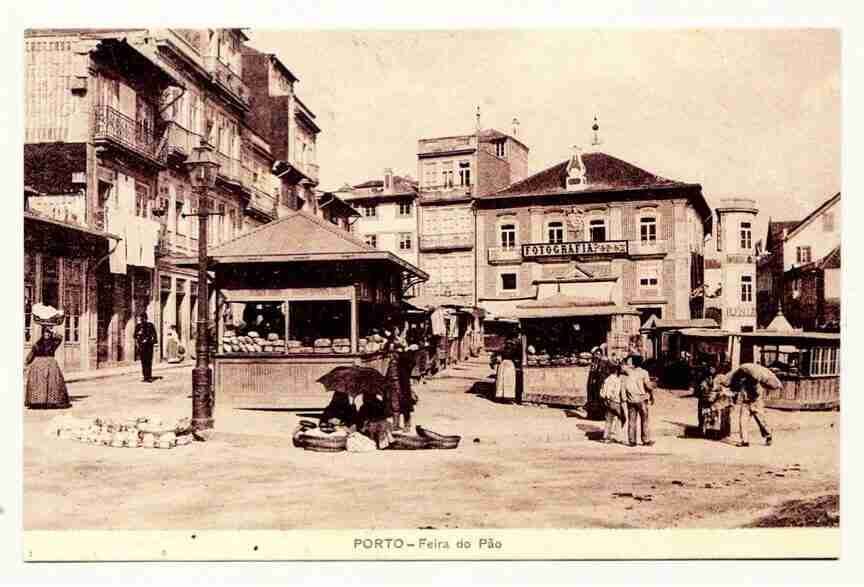
Like everything else I'm making for Port Callus, the shops here are inspired by things I've seen walking around my new home of Porto, as well as things I've read about it. Since I'm designing a city inspired by Porto, I figured boning up on local history would be both helpful and entertaining, and I was right. Like a lot of older cities, Porto used to house a lot of thriving markets, many of them specialized-- like the Feira do Pão, a bread market that used to be just around the corner from where we stayed after first moving; and the Mercado do Peixe, which, as you might imagine, was a fish market.


It's hidden behind the stall, but the last building on the row on the left is actually a Taco Bell now.

Unfortunately, a growing population, increased economic pressures, and stricter city government meant a slow decline for the old markets. As Porto grew, City Hall wanted the markets moved away from the nicer parts of the city that they'd helped make so economically successful. But while that was a problem, the real death-knell for most of the small specialty markets were the rise of larger, all-in-one markets. Usually large buildings designed to house lots of smaller stalls, this is where the city's government consolidated the smaller markets they kicked off the streets. Of course, in a turn of irony, so many of these markets would eventually be rendered obsolete by large malls and box stores.

This isn't to say that Porto has no markets though! On the contrary, there are about a half-dozen large-scale markets like the Mercado do Bolhão and Mercado Beira-Rio, where you can buy fresh fruits, vegetables, fish, wine, and everything else. And there are dozens of small-scale, open-air markets scattered around the city (usually referred to as feiras, from what I can tell). So while markets not be as common as they were in the heydays of the mid-1800s, there are still a lot of them in the city, especially the older portions (and so a lot of inspiration to be had by walking around them).